
Interviewed By Janelle A. Pelli
In this interview, United States Magistrate Judge Mitchell Katz reflects on his journey from a commercial litigation career to serving on the federal bench in the Northern District of New York. He shares practical insights for litigators on preparation, credibility, active listening, and effective advocacy.
1. Let’s start with some background. Can you tell us a bit about yourself and your path to the bench?
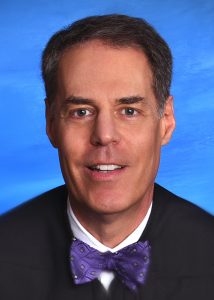
I was born in Brooklyn, moved to Queens, and grew up attending New York City public schools. I went to SUNY Binghamton for undergraduate and Boston University for law school, graduating in 1986. I joined Hiscock & Barclay, LLP after graduation, became a partner in January 1992, and left that May to join Menter, Rudin, and Trivelpiece, P.C. In 2018, Menter merged into Barclay Damon, where I stayed until I joined the court.
COVID hit while I was the commercial litigation practice group leader at Barclay Damon. At the time, I was managing 42 lawyers across Barclay Damon’s firm network. It was heartache trying to connect with new lawyers who had never stepped into the firm. I held many Teams calls trying to keep everyone from losing their minds.
Unfortunately, tragedy struck my family which caused me to reflect on my 37-year career. As luck would have it, Judge Baxter decided to retire, and I thought it was time to give it a shot for the Magistrate Judge position. I was blessed to be selected in the summer of 2023 and I joined the court in 2024. I loved the people and the practice, but coming to the court was the right move at the right time.
2. Can you tell us about a notable or memorable case you tried as a commercial litigator?
I have a gaggle full of doozies. One that sticks out: Menter had a substantial bankruptcy practice, and I represented a small, regional airline in bankruptcy court here in Syracuse.
My partner put the airline into bankruptcy. He went to Judge Gerling on a Saturday and persuaded him to enter a Temporary Restraining Order against the Federal Aviation Administration (FAA), which was endeavoring to terminate the airline’s Air Worthiness Certificate. My partner called me that weekend and asked, “What are you doing on Tuesday?” We had a hearing—essentially a mini trial—on a preliminary injunction on Tuesday. From Saturday to Tuesday, I learned everything there was to know about federal aviation regulations. On Tuesday, I was in court in Utica examining witnesses.
The next day, in Syracuse, while I was examining a witness, the proceedings were interrupted because Judge Munson wanted to see us. We all left—the bankruptcy Judge, staff, lawyers—and went to Judge Munson’s chambers (which are my chambers now). He took the case from Judge Gerling (he “withdrew the reference”), and he gave each side four hours the next day to present the case by offer of proof. We worked all night. We presented our case, but ultimately, Judge Munson denied the motion for a preliminary injunction and vacated the TRO, and the airline stopped flying.
We were leaving the courthouse with the President of the airline when Judge Munson shows up to meet us out in front of the Hanley Building. He reached his hand out to the President and said, “I had to decide the way I decided, but I want to wish you good luck and hope you can get back to business.”
The airline shut down for a week after that, but it was able to “recertify” the airline and got it flying again, and then the IRS took away their airplanes!
That case is burned into my memory. It was the first case in the United States where a bankruptcy court had issued injunctive relief against the FAA. My first witness was the in-house lawyer for the FAA, who was also the acting administrator when he signed the revocation order, so I was able to examine him over the FAA’s objection. It was a very unusual case and ended with that very special encounter between Judge Munson and the President of the airline.
3. In your opinion, what makes a good trial attorney?
Be thorough and prepared. You win your cases in the office. The ability to perform well in court is necessary, but what distinguishes good lawyers from great lawyers—from successful trial lawyers—is the work done beforehand. Everything from knowing your case, knowing your client, knowing their business, learning courtroom technology, following court rules, pre-marking exhibits, and making sure you have a solid foundation to offer evidence.
The last piece is you must be a great listener. I’ve seen lawyers pass over great opportunities on direct and cross-examination when they don’t listen to the answer because they’re sticking to their script. For example, “Did you talk to J. Smith on Tuesday?” Answer, “I did not talk to him on Tuesday.” The follow-up should be, “When did you talk to John Smith?”—not just accepting the answer as stated. If you aren’t listening, you miss that opportunity.
Being an active listener is essential, especially with clients. You receive what they say, give them feedback, and have empathy for the people you’re dealing with. On that note, I’ve never yelled at a witness on cross. Instead, my voice gets soft and I very carefully and respectfully endeavor to disassemble the witness. And sometimes you just take your lumps. Know when to stop talking!
4. How do you approach your role as a judge? What do you find to be most rewarding and most challenging about the bench?
I approach the job with immense gratitude and humility. I still laugh about the fact that people open doors for me and stand up when I enter the room. It’s an enormous and consequential responsibility. I work hard to be cognizant of the impact of the decisions I make.
One challenge I face is that I had no criminal law experience when I joined the court. When that came up during the selection process interview, I was asked what I would do to fix that. My answer was a lot of study, which I’ve done since I joined the court.
It’s really important for me as a judge, just as it was as a lawyer, to say, “I don’t know.” Once, in bankruptcy court in New York City, a judge asked me to interpret a bizarre phrase in a contract, and I told the judge, “I don’t know.” He looked at me like I had committed a mortal sin. It’s important as a judge that if I don’t know, I need to figure it out. It is often the lawyer’s job to teach. If you looked me up, you would see no criminal experience as a trial attorney. Come in and teach me.
One of the things I love about the job is that I learn something new every day—sometimes two or three new things. I have learned from my colleagues that sometimes you need to take a recess, go back to chambers, and reflect on the issues. Often there is no obvious answer, and that’s where the judging comes from. And I take that role very seriously.
5. Knowing what you know now from sitting on the bench, what advice do you have for attorneys?
When you come to court, you know your case—you’ve been living with it day to day, week to week, month to month, year to year. I don’t know your case as well as you do.
The role of teacher is so important for lawyers. Having command of the facts and the law and being able to communicate all of that to the court is an enormously important role.
And one footnote on practicing in front of me: if you want oral argument in the courtroom, all you have to do is ask. I’ve been struggling with virtual options for communicating with lawyers. I recognize the value of virtual appearances when there are lawyers from distant places and having them come for a one-hour discovery conference may not be the most efficient use of their time or their client’s resources. But I think we lose a lot when we aren’t in the room together. When I started practicing, the state court IAS system was being implemented. There was a motion calendar where all lawyers showed up, and we accomplished a lot by talking to each other in the hallway. We were also able to see people, talk to them, make friends, and have connections. It can be very useful and helps build a sense of community.
6. What do you see as the biggest mistake litigators make during trials or when appearing before the Court?
The flip side of what I just said: the lawyer assumes I will remember the details of their case from the last time I saw them. Although I’m managing discovery, in some cases I don’t have to do much. Do not assume that I can remember the details and nuances of your case.
The other thing I see lawyers do is stake out objectively unreasonable positions and refuse to compromise. I see lawyers who feel the need to defend every inch of ground. Maybe you have to defend every inch when you’re in a war, but litigation is not war. You lose credibility when you take unreasonable positions and are unwilling to compromise. I understand that clients sometimes won’t agree to something. If that happens, the lawyer needs to explain that to the judge because the lawyer’s credibility is on the line. If you have to take an unreasonable position, you owe it to yourself and to the court to explain.
Another thing I’ve seen is lawyers object to evidence but haven’t thought through the implications of being sustained. If you objected to evidence on day one and realize on day five that you needed that evidence, you have a problem.
You have to think your decisions through. The challenge is we don’t do a lot of trials, and litigators without trial experience don’t have the perspective of what the case will look like at trial. Always build your case from the beginning by asking, “What’s it going to look like at trial?” Build the complaint from the jury instructions. Prepare your answer carefully and provide factual allegations in support of your defenses if you can. I was always a fan of assuming the case was going to trial. Knowing what you have to prove helps you build the case.
Another thing lawyers don’t seem to always do—they don’t go back and read their pleadings throughout the case, and they may not review their Rule 26 disclosures. If you do not update your Rule 26 disclosures and properly supplement your discovery responses, you are going to have a problem with your dispositive motion or at trial.
7. Can you give us some insight into your chambers? How do you use your clerks to support you and what do you look for when you are hiring?
The judge has to make the decision, but it doesn’t happen without the effort of the law clerks and the courtroom deputy. There’s just too much information.
As far as my clerks, I’m looking for someone who’s going to fit in chambers. I want to build a sense of community. I am not a fan of a one-year clerk rotation because I spent many decades hiring and training new lawyers, so I know how much work it requires to train someone before they can be productive. As a Magistrate Judge, I get two clerks. I have a career clerk, and a term clerk for two years.
I’m looking for the same qualities I looked for when hiring at my law firm: high-quality law school work and a strong writing sample, plus an engaging interview. Chambers is a small law firm. I’m used to having the resources and people of a law firm, so I rely heavily on my clerks. My career clerk divvies up the work with the term clerk. We try to spread around the subject matter so the work is interesting.
When I joined the court, I had a rule from practicing: I would not assign any task to a new lawyer or paralegal that I hadn’t done myself. I’ve done that throughout my career. Since joining the court, I have written drafts on each kind of case on my docket.
My writing gets reviewed by my clerks, they review each other’s work, and then I review and edit the final product. Sometimes we “fight” about the direction I want to go. I appreciate a good debate!
I learn a lot from my clerks. You learn perspective when you are with people from different backgrounds. People come to things from different places, and everyone can offer something useful—even the inexperienced lawyer who asks, “Why would you do this? Why would you do that?” Those questions can reveal blind spots.
I could not do the work without my team.
8. You were past president of the FCBA – NDNY and past Chair of the Commercial and Federal Litigation Section of NYSBA. What role have bar associations and professional groups had in your career?
This is a most important question. Here’s why: we have lost our sense of connection and community. COVID killed the “water cooler” conversation. COVID killed too many workplace relationships. Bar Associations—everything from local bar, affinity and statewide and national bar associations are hugely beneficial for learning skills, writing opportunities, journal writing, article writing, book chapter writing, and networking. Our Federal Court Bar Association provides great value to lawyers and to the Court. If you need a legal education program, want to attend a social event, meet the judges, take on a pro bono assignment and improve your skills, the FCBA is your answer.
When I started practicing, I was a member of the Onondaga County Bar, the New York State Bar and the American Bar Association. As my practice became more regional and super-regional, the relationships I developed in those bar associations served me very well. And when the FCBA was born, my mentor told me to sign up and I did. It was one of the best “decisions” I ever made.
Bar associations are important for professional growth and personal development. Joining is not enough: you need to participate. I’ve made great friends from these organizations. I’ve learned a huge amount about the practice of law, the business of law, litigating, trial practice, and ethics. It’s been hugely valuable. I urge all lawyers to participate and to share with their colleagues the value of membership, especially with the FCBA.
9. You were also pro bono partner at Barclay Damon. Can you speak to the value of attorneys doing pro bono work?
I shared the job with one of my partners—I was also on the firm’s diversity committee and co-chair of the Syracuse diversity team. Pro bono work is for the public good, so it seems like an easy sell. Lawyers are given an exclusive on the practice of law, much to the chagrin of pro se litigants. We’ve been given a great gift and earned the ability to have permission to practice—but it’s conditioned on giving back. I look at it as a moral and ethical obligation to serve the public interest.
All lawyers should do it. Remember what I said about perspective. You learn a huge amount when you represent a client in a family law matter, like drafting documents so when your client goes to jail, someone can take care of their children. I worked on an immigration case with the Volunteer Lawyer Project to help an Afghan refugee get status in the U.S. I took assignment of a couple of pro bono cases from the Court. It is a blessing to help people you may not ordinarily encounter in life or practice and is hugely beneficial. When you help people get through the morass of regulations to get Social Security benefits or rent support, your life is enriched by that experience. You don’t realize how much benefit you get from providing pro bono service: perspective, humility, and enormous satisfaction. If you’re helping people in your community, you’re helping your community. If the work you do means one less person is on a street corner begging for spare change, you’ve done beautiful, divinely inspired work.
Find the time to volunteer. The opportunities are all around you. You need only raise your hand.
10. Do you have any recommendations for those who are graduating law school or just starting their careers?
You need a plan. Do you know what you want to do? Do you know where you want to do it? Can you afford the job you want?
You can’t do it alone. Find mentors. If you’re in law school, find a professor you connect with and ask them for advice. After you graduate, identify people in your life who can provide perspective. Your mentors do not need to be just lawyers. You can have a whole team of trusted confidants.
Anyone getting into a legal career needs to be mindful about self-care. When I was a new lawyer, I made a half-hearted effort at it, but I always placed self-care after the work. I paid for a lot of gym memberships I never really used. Taking care of yourself is important: mind, body, and soul. You can’t do good work or be a good partner, spouse, parent, child, brother, sister and friend unless you’re grounded and healthy. It’s important to learn how to say no. That’s a really hard thing to do, and mentors can come in handy as you try to figure out balance.
You will not find balance in your life from day to day. Think about balance over many months; sometimes you really just need to burn the candle at both ends, but that is not sustainable over an extended period. You must set reasonable boundaries. Otherwise, you will burn yourself out.
11. When you aren’t working, what do you like to do for fun?
I was a home builder with Syracuse Habitat for Humanity. I loved that work and learned how to build things, and it was a wonderful, joyful experience. I’m a “putterer”—I own power tools and know how to use them and still have all my fingers! My wife and I own a summer home which I have been working on renovating for years. I go to the gym regularly and I am trying to get back to long distance running if my aging body will permit it. I like to read, watch new shows with my wife, and spend time with my family. I also enjoy alpine skiing. I lead a pretty boring life and that is fine with me!