
The FCBA’s Pro Se Assistance Program provides invaluable support to individuals navigating federal court without legal representation. The program relies on dedicated attorneys who have the temperament and expertise to help pro se litigants better understand court procedures and present their claims effectively. We are pleased to introduce the two attorneys who Co-Chair our Pro Se Assistance Program Committee and make this important work possible.
Abby McCormick-Foley
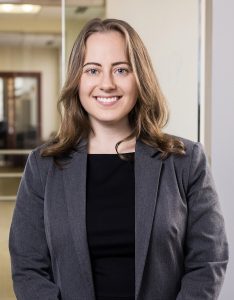 Abby McCormick-Foley, formerly in private practice at the law firm of Capezza Hill, is currently employed by Albany County as an Assistant Alternate Public Defender where she provides criminal defense to individuals charged with violations, misdemeanors, and felonies. She graduated cum laude from Albany Law School and summa cum laude from SUNY Oswego, where she studied psychology and Spanish. Abby also serves as assigned counsel with the CJA (Criminal Justice Act) panel, representing clients in a myriad of federal criminal cases. Fluent in Spanish and committed to expanding access to justice, Abby brings both legal expertise and compassion to her work assisting pro se litigants.
Clifford G. Tsan
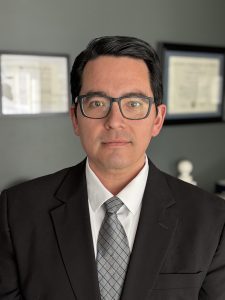 A graduate of Stanford University and Columbia Law School, Cliff Tsan spent much of his legal career as a litigation attorney at Bond, Schoeneck & King, PLLC in Syracuse, where he handled complex litigation matters in both federal and state courts, including numerous cases in the Northern District of New York. After retiring from private practice in 2020, he devoted his time to public service and access-to-justice initiatives, including serving as President of the Board of Directors of the Volunteer Lawyers Project of Central New York. Cliff brings decades of litigation experience and a deep commitment to helping self-represented litigants better understand and navigate the federal court system.
What inspired you to become involved with the NDNY-FCBA Pro Se Assistance Program?
Abby: I learned about pro se assistance from Ben Hill, who coordinated the program with Rob Wells for many years. I enjoy helping underserved community members receive access to the courts, which is a right every citizen has regardless of education or economic status.
Cliff: I had a number of cases involving pro se litigants when I was in private practice, including volunteer opportunities but also cases where my client was opposed to a pro se litigant. It was generally my experience and impression that pro se litigants face numerous obstacles to justice and redress in our legal system, ranging from substantive hurdles to procedural issues. When I learned about the Pro Se Assistance Program, it was the perfect opportunity for me to aid pro se litigants with guidance and compassion, helping them navigate the system and hopefully making the process a little less stressful.
What do you find most meaningful or rewarding about working with pro se litigants?
Abby: The appreciation that the litigants have for our services is remarkable. They are grateful to have a platform to share their story and a brain to pick. I find it most rewarding when the pro se litigants start to take more initiative on their own and make big decisions for their cases with more confidence than when they first started.
Cliff: Most people need a friendly ear to listen to them and patiently answer their questions, especially when feeling stress and anxiety about their case. I find it very rewarding to help alleviate their worries, even if just a little.
What is one common misconception about pro se litigation that you think attorneys should understand?
Abby: Pro se litigants are passionate about their cases and dedicate a significant amount of time to the matters. It can be all-encompassing for them. There may be a misconception that litigants just want money, but I find often they aren’t seeking monetary damages at all—they want what they believe to be justice for their case.
Cliff: A common misconception might be that most pro se cases are frivolous. While some are, many present actionable claims. Sometimes the legitimacy of those claims can be lost amidst other material in the complaint, or the claim simply is not presented clearly enough for the Court to evaluate. One of my roles is to help pro se litigants put their best foot forward so their claims receive a fair evaluation while also improving the efficiency of the adjudication process.
How has participating in the Pro Se Assistance Program influenced you or your perspective as an attorney?
Abby: An attorney should be the client’s best advocate, which means having as much or more passion about the case as your client. Viewing the pro se litigants’ passion can help us show up louder and stronger for our private clients.
Cliff: It has furthered my compassion for all litigants, including those represented by counsel. Our legal system is robust and refined, but it can also be incredibly intimidating.
Outside of your legal work, what are a few interests or activities that our members might be surprised to learn about you?
Abby: My passion outside of the law is animal rescue—I founded and run a nonprofit foster-based animal rescue.
Cliff: I spend as much time in the Adirondacks as possible with my family, including our incredibly goofy rescued Bernese Mountain Dog.